+91 98765 43210
info@prakrutiayurveda.com
Mon-Sat: 9AM - 8PM

Ancient Roots of Ayurveda

Journey through 5,000 years of wisdom that shaped the world's oldest holistic healing system

Back to Home

What is Ayurveda?

Ayurveda is an ancient natural healing system that originated in India more than 5,000 years ago. The word "Ayurveda" comes from Sanskrit, meaning "Science of Life" (Ayur = life, Veda = science or knowledge).

It represents a complete medical system that recognizes the body, mind, and spirit as being interconnected. Instead of treating only symptoms, Ayurveda works to find and heal the root cause of health problems through natural methods such as herbal medicines, therapeutic massages, healthy diet, yoga, and lifestyle practices.
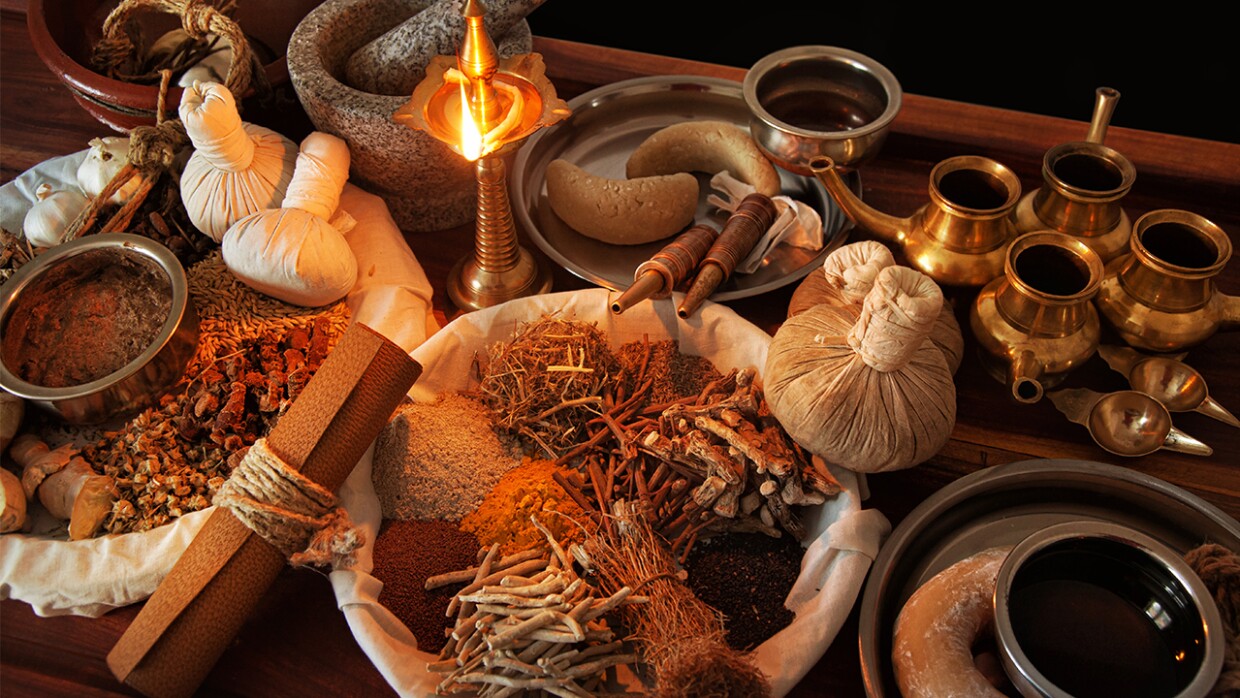
Ayurvedic Herbs

Historical Timeline of Ayurveda

3000 - 1500 BCE

Vedic Period

Vedic Period

Ayurveda finds its roots in the ancient Vedic texts - the Atharvaveda contains numerous references to healing and medicine.

Early concepts of disease, herbs, and healing rituals were established during this period.

1500 - 600 BCE

Classical Ayurveda

Classical Ayurveda

The foundational texts of Ayurveda were composed during this period.

The concept of Tridosha (Vata, Pitta, Kapha) was systematically developed and documented.

600 BCE - 200 CE

Systematization Era

Systematization Era

The great Ayurvedic treatises - Charaka Samhita and Sushruta Samhita - were compiled.

Sushruta, known as the "Father of Surgery," described over 300 surgical procedures and 120 surgical instruments.

200 - 1200 CE

Golden Age of Ayurveda

Golden Age

Ayurveda flourished under various Indian kingdoms and spread to neighboring countries.

Development of specialized branches including pediatrics, surgery, toxicology, and rejuvenation therapy.

1200 - 1800 CE

Preservation Period

Preservation Period

Despite challenges, Ayurvedic knowledge was preserved through family lineages (Gurukul system).

Texts were translated into Persian, Arabic, and Tibetan, spreading Ayurvedic wisdom globally.

1800 - Present

Modern Revival

Modern Revival

Revival of Ayurveda as a complementary and alternative medicine system.

Scientific validation of Ayurvedic principles and integration with modern healthcare practices.

Fundamental Principles

Tridosha Theory

Every person has a unique constitution formed by three biological energies: Vata (air/space), Pitta (fire/water), and Kapha (earth/water). Health is maintained when these doshas are in balance.

Panchamahabhuta

The universe and human body are composed of five basic elements: Earth, Water, Fire, Air, and Ether. These elements combine to form the three doshas and all matter in existence.

Holistic Healing

Ayurveda treats the individual as a whole - body, mind, and spirit. It emphasizes prevention, lifestyle management, and natural therapies to maintain optimal health and well-being.

Ancient Ayurvedic Texts

Charaka Samhita

One of the foundational texts of Ayurveda, focusing on internal medicine. It contains detailed descriptions of diseases, their causes, and treatments.

Compiled around 400-200 BCE

Sushruta Samhita

The primary text on Ayurvedic surgery, describing over 300 surgical procedures and 120 surgical instruments. Sushruta is considered the father of plastic surgery.

Compiled around 600 BCE

Ashtanga Hridayam

A comprehensive text that synthesizes knowledge from earlier works. It's known for its practical approach and systematic organization of Ayurvedic knowledge.

Compiled around 500 CE